
More thinking isn't solving it. It's just more thinking.
The C.A.L.M. Method is a four-step practice for when you can't get out of your own head — something to reach for that isn't another round of the same loop. The free audio is 20 minutes.
Free · no signup required · backed by 184 research citations · edited by Jon Kabat-Zinn's editor
You keep reacting the same way even though you can see it happening.
Your sense of who you are has gotten shaky — and you can't quite explain it to anyone.
You've tried staying positive. It helps for a while. Then it doesn't hold.
If any of that sounds familiar — good. That's what this is for.
A framework for what's actually happening
Most approaches to emotional reactivity try to change what you think or feel. The C.A.L.M. Method goes one step earlier than that — it changes your relationship to what's happening, before you decide what to do about it.
C — Connect Pause and notice what's actually here — your body, your breath, your thoughts, the room you're in. Not to analyze it. Just to make contact with it.
A — Allow Let the moment be what it is, without rushing to fix or label it. Allowing doesn't mean approving. It means stopping the fight with what's already true.
L — Let Go Notice the voice in your head that's narrating the situation — and stop following it. The commentary isn't the experience. You don't have to act on it.
M — Move Forward Take the next step from awareness, not from habit. Action informed by the present moment instead of by the pattern that's been running on autopilot.
The audio walks through all four steps in real time. It's the fastest way to understand how the method actually works.
Hi, I'm Mike Barden.
I developed the C.A.L.M. Method after losing a ministry position in 2008 and a marriage — and a second church community — in 2014. What was disorienting about those years wasn't just that the circumstances had changed. It was that my sense of who I was had come loose from the things I'd used to hold it in place.
What came out of that stretch wasn't a new belief system. It was a distinction I'd been missing — between the circumstances that kept shifting and the steadier awareness underneath them. That distinction became the method. The book and the practices are the part of that experience that turned out to be useful to other people.

Where do you want to start?
Each video goes deep on one piece of what the C.A.L.M. Method addresses. Find the one that fits where you are right now.
If you’ve lost a major part of your life and you don’t know who you are anymore:
If your sense of self has gotten shaky
If you can't seem to relax even when nothing's wrong
Latest from the blog:
Go deeper with the book
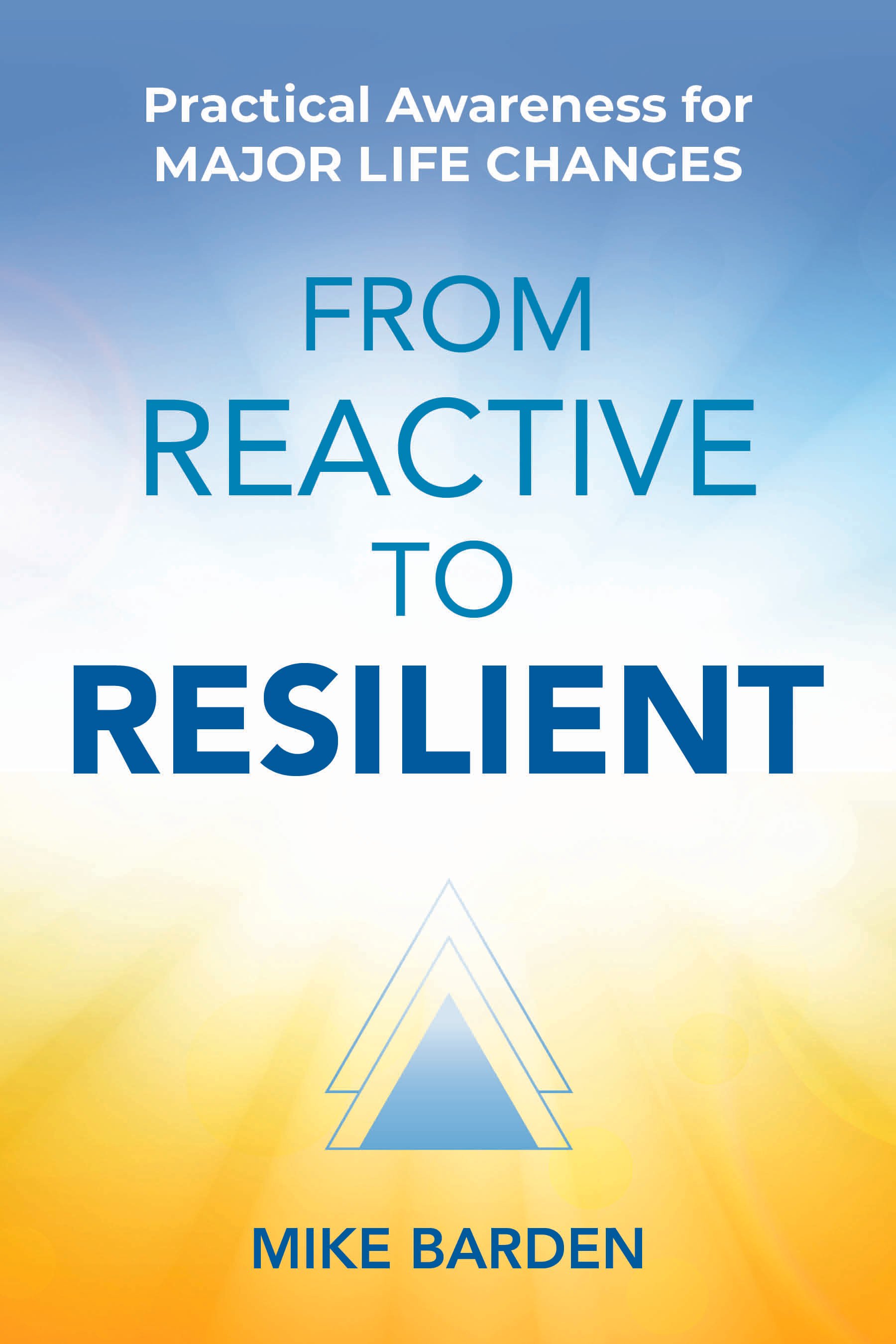
From Reactive to Resilient applies the C.A.L.M. Method across fourteen chapters — each one built around a specific stuck-point: identity disruption, grief, defensiveness, nervous system dysregulation, and more. It includes 184 research endnotes and was edited by Cathy Suter, who has edited books by Jon Kabat-Zinn.
If the free audio practice resonates, the book is the next step.
Thanks for being here. If you're in the middle of something hard, I hope this is useful. — Mike
Losing a spouse changes more than your daily life — it can shake your sense of who you are. Here's why that happens, and what actually helps you find steady ground again.